
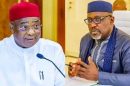















The International Basketball Federation (FIBA) has taken a firm position on the protracted leadership dispute within the Nigeria Basketball Federation (NBBF), officially affirming the legitimacy of the board headed by Ahmadu Musa Kida while outlining a definitive schedule for new elections later in the year, Puyaka.net reports.
In a correspondence dated March 16, 2026, and endorsed by FIBA Secretary General Andreas Zagklis, the global body clarified that the tenure of the current NBBF leadership remains in force until October 15, 2026. It further directed that elections into the federation must take place only after the conclusion of the 2026 FIBA Women’s Basketball World Cup and must be completed on or before that date, with a newly elected board assuming duties the following day, October 16, 2026.
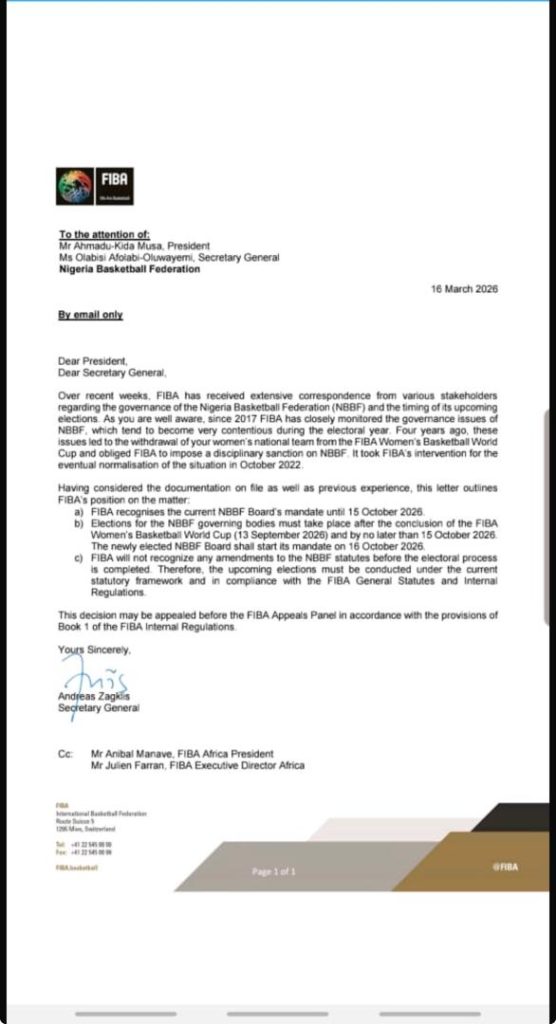
FIBA additionally ruled out any immediate changes to the NBBF statutes, insisting that no amendments will be acknowledged until after the electoral process is concluded. It stressed that the forthcoming elections must be conducted strictly under the existing legal framework and in full alignment with its General Statutes.
The decision comes against the backdrop of rising friction within Nigeria’s basketball administration, where differing interpretations of the current board’s tenure have intensified internal divisions among stakeholders.
While the Kida-led board argues that its term extends to October 2026 based on the date of inauguration, dissenting voices maintain that the mandate lapsed in January 2026, marking four years since the last election cycle.
The dispute has prompted multiple petitions to FIBA, with critics accusing the leadership of exceeding its tenure and demanding the immediate conduct of fresh elections.
FIBA’s latest intervention appears to have resolved the question of legitimacy for now, reaffirming the authority of the incumbent board while setting a clear roadmap for transition.
The move reinforces FIBA’s position as the final authority in basketball governance, particularly in matters involving its affiliated national federations. It also serves as a caution against parallel electoral processes or attempts to revise statutes midstream, actions that could further destabilise the sport.
Although the ruling may ease immediate tensions, it leaves no room for non-compliance, as any violation of FIBA’s directive could result in sanctions, including the risk of suspension from international basketball activities.




Add Comment