













By Emmanuel Mbah
Former SWAN President, Fan Ndubuoke, has delivered a scathing critique of Nigeria’s sports administration, warning that Emmanuel Amuneke’s coaching career may be doomed, not by lack of ability, but by a system he believes is deeply flawed and politically driven, Puyaka.net reports.
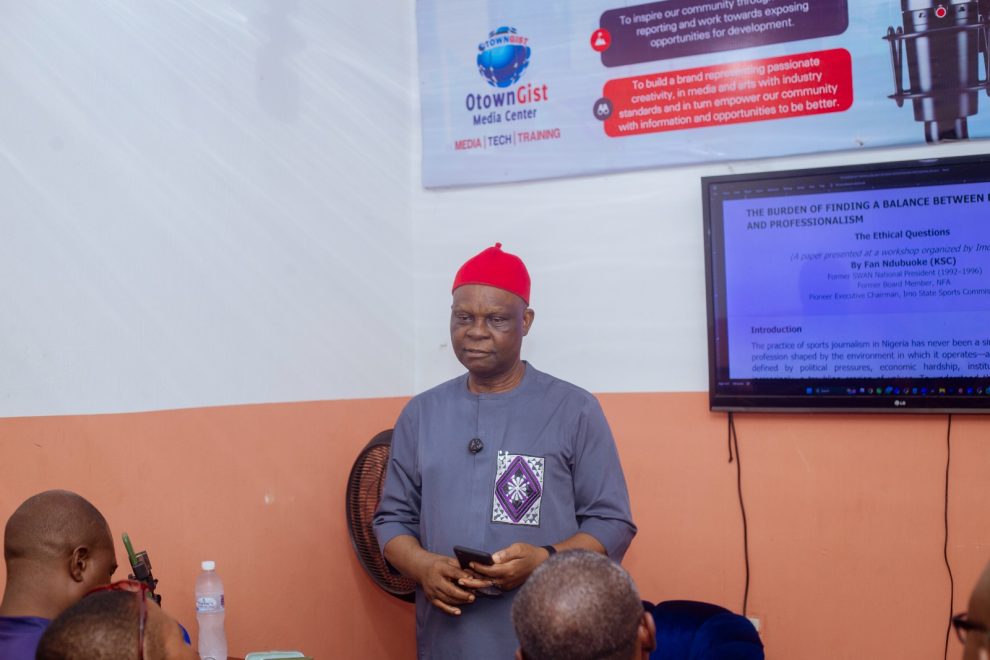
Speaking at a special SWAN workshop hosted by Imo SWAN in Owerri on Tuesday, Ndubuoke argued that any success recorded by Amuneke at club level could unsettle entrenched interests who once denied him the opportunity to lead the Super Eagles.
According to him, the odds are stacked against the former African Footballer of the Year.
“If Amuneke succeeds, it will expose those who blocked him. That’s why the system won’t allow him thrive,” Ndubuoke said.
He advised Amuneke to reconsider his current role at Heartland FC, suggesting a strategic retreat from the frontline.
“He should move into the background and handle high-level engagement with government. Let someone with national influence interface with the NFF. Without that structure, he will struggle,” he added.
Ndubuoke did not mince words about Heartland’s current predicament, warning that the club’s struggles could further damage Amuneke’s reputation.
“What is happening now will always be used against him, ‘he couldn’t manage Heartland, couldn’t lift them from relegation.’ He needs to act fast to save his name.”
Beyond Amuneke, Ndubuoke widened his criticism to the broader sports governance structure in Nigeria, describing it as lacking legal backbone and vulnerable to manipulation.
He questioned the legitimacy of the National Sports Commission (NSC), claiming it operates without a clear statutory framework.
“The NSC functions more like an administrative improvisation than a properly established institution. There are no defined powers, no enforceable accountability,” he said.
In a striking analogy, he likened the system to a Ponzi scheme.
“Funds flow from government into the hands of a select few, while athletes, coaches, and grassroots programmes get crumbs. It’s a cycle that benefits administrators and their allies.”
Ndubuoke also turned his attention to the media, challenging sports journalists to uphold integrity in an environment riddled with pressure and influence.
He lamented what he described as a growing culture of patronage over professionalism.
“Many journalists are no longer chasing excellence. They are chasing access, political favour, and easy money.”
Despite the obstacles, ranging from hostile working conditions to intimidation, he urged journalists to remain steadfast.
“Truth-telling is often mistaken for disloyalty, but real patriotism demands courage. A journalist who suppresses facts in the name of patriotism is neither patriotic nor professional.”
Ndubuoke concluded with a call for reform, insisting that meaningful progress in Nigerian sports will remain out of reach unless systemic issues are confronted head-on.
“Until we address the institutional illegality and this Ponzi-style governance, talk of professionalism and patriotism will remain empty rhetoric.”
His remarks have once again thrown the spotlight on the intersection of politics, sports, and media in Nigeria, raising tough questions about accountability, structure, and the future of the game.



Add Comment