














By Emmanuel Mbah
Nigeria’s subsidy saga is back in the spotlight as the Federal Government warns that any move to restore petrol subsidies could wipe out the fiscal gains of President Tinubu’s reform agenda and knock investor confidence off balance, Puyaka.net reports.
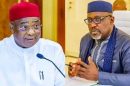
Minister of Information and National Orientation, Mohammed Idris, made the case in an Op-Ed headlined “Restoring Fuel Subsidy Will Reverse Nigeria’s Economic Gains,” arguing that reversing the subsidy would rekindle the distortions and shortages that once plagued the sector and made subsidies untenable.
Tinubu scrapped the subsidy soon after taking office in May 2023, a decision that has become one of the administration’s most consequential and controversial policies. Idris warned that reversing course would reintroduce the fiscal distortions, fuel scarcity and arbitrage that had made subsidy costs unsustainable.
Citing 2022 as a vivid example, he noted that Nigeria spent about $10 billion on fuel subsidies amid falling oil production and weak government revenues. He also pointed to World Bank cautions that resources devoted to subsidising petrol could have funded critical priorities such as education, healthcare, infrastructure and social protection.
In a broader economic frame, Idris highlighted figures from the Federal Government’s Reform Scorecard: The Benefits, Costs and Harms Prevented. He said subsidy savings freed up about N15.8 trillion in resources for the Federation between June 2023 and December 2025—broken down as roughly N5.43 trillion for the Federal Government, N6.52 trillion for states, and N3.88 trillion for local governments. He stressed that this was not a separate cash reserve but part of a broader fiscal space created by subsidy removal.
The additional fiscal room, Idris argued, has enabled all tiers of government to better meet salary and pension obligations while funding infrastructure, security, agriculture, human capital development and other public services. The Reform Scorecard also cited about N6.47 trillion in extra spending on strategic infrastructure and more than N400 billion committed to major social investment programs.
Among those programs are the Nigeria Education Loan Fund, the MOFI Real Estate Investment Fund and CREDICORP, with social transfers reaching more than 10 million Nigerian households. He conceded that electricity subsidies alone were estimated at about N3.14 trillion between June 2023 and December 2025, but warned that reviving petrol subsidies would strain government finances at a time when the administration is pursuing fiscal consolidation.



Add Comment